
This Is Your AI Strategy
Years ago I went to a technology conference. Two thousand attendees. An entire hall of vendors. Booths lining every wall, laser pointers, free pens, badge scanners.
A colleague leaned over and said: "The only people making real money here are the vendors selling services to the attendees."
He was right. They were selling shovels. During the California Gold Rush, the people who made the most money were not the prospectors. It was the people selling shovels and a dream to the prospectors. My colleague and I were the prospectors.
Every time I look at the current AI services market, I think about that hall.
The echo
Open YouTube. Search "how to start an AI business." Watch what comes back.
Men in rented Lambos. "Reply COMMENT below and I'll send you my $5,000-a-month blueprint." Funnel after funnel selling the dream of selling AI to small businesses.
The structure is identical. The people making the most money are the ones selling the idea of selling AI, not the ones actually doing it.
This is not surprising. Early markets always look like this. The gold rush sold more shovels than gold. Crypto sold more courses than it produced utility. Drop-shipping sold more drop-shipping courses than drop-shipped goods.
It is a stage. It is not the whole story.
The other thing I keep hearing
Owner: "Oh, AI? Yeah, my nephew handles that. He's good with computers."
Translation: nobody is handling it. The nephew showed them ChatGPT once. Maybe set up a free account. There is no plan, no policy, no measurement, no integration.
I have seen this scenario before.
2004
I had this same conversation in 2004. Replace "AI" with "the website."
"Oh, our website? Yeah, my nephew built it. He's good with computers."
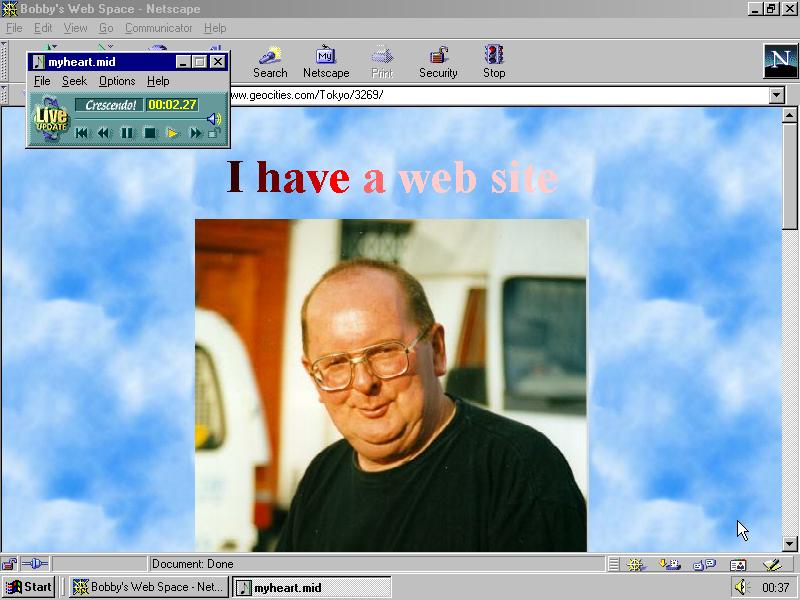
The nephew built a Geocities site. Comic Sans. A hit counter. A spinning globe gif. It worked for about six months. Then the business realized nobody was finding them online. Their competitors had real sites with real booking pages. They were losing customers.
Then they called someone who actually did this for a living.
By then their competition had built several years of head start in months.
2026
The 2026 version of this story is already playing out.
The nephew helps set up ChatGPT. Maybe a free Zapier integration. Everyone feels modern.
Nothing changes. The calls still go to voicemail after 5pm. The leads still sit in the inbox for three days. The admin still eats four hours of the owner's morning.
Meanwhile, the competitor down the street has an AI that answers calls, books appointments, and texts back missed calls in under a minute. That competitor's owner is not reading LinkedIn posts about AI. That owner hired someone who knew what they were doing.
Same story. Different decade.
Starting matters
If you have not started with AI in a real way, the urge to wait another six months is understandable. The hype is exhausting. The vendor noise is exhausting.
Waiting is still wrong.
One month is enough time for your nearest competitor to install a system that answers every call, qualifies every lead, and follows up faster than any human on your staff. Three months is enough time for your no-show rate to look bad next to theirs. Six months is enough time for their Google reviews to compound.
The shift is not speculative anymore. It is already priced in for early movers.
But a bad start is worse than no start
This is the part most blog posts skip.
A bad AI start can be worse than no start at all. Pilot with no owner. Tool with no process. Automation wired into the wrong workflow. Model responding in the voice of a stranger. Data exposed because nobody checked permissions. Staff trust burned because the first rollout was clumsy.
Once a business is burned on an AI rollout, the second attempt is twice as hard. The owner gets cynical. The team gets defensive. The budget becomes a scar.
This is why the nephew path is dangerous. It is not that nothing happens. It is that something happens badly, quietly, and nobody knows it is broken until there is a bigger problem to clean up.
What good looks like
Good does not look like a shovel seller with a Lambo.
Good looks like someone who asks about your calls, your follow-up, your admin load, and your competitors before they say the word AI. Good looks like a written plan you can show your accountant. Good looks like a rollout that runs alongside your existing process for two weeks before replacing anything. Good looks like numbers you can measure at day 30.
Good is boring. Good is operational. Good is the thing that does not make it into a viral YouTube thumbnail.
The conference hall
I think about that conference hall a lot.
Most of those vendors are not around anymore. The ones that lasted were the ones who quietly went off and did the work, for real customers, in real markets, away from the hall.
The AI market will sort out the same way. The shovel-sellers will thin out. The operators will remain.
If you are a business owner trying to figure out which side of that line to be on, the question is simple. Are you buying the blueprint, or are you running the business?
Pick one. Start.